There was a cloud. Particles attracted and formed groups. They grew in weight and gravity pulled them into the center. The snowballed in growth and entered the center. Then some things happened and they were pushed forward through the cycle. Then the particles expanded and became another cloud. Then the cycle repeated.
Externalities and public goods are two important concepts in microeconomics that deal with market failures—situations where the free market does not allocate resources efficiently or fairly.
1. Externalities
An externality is a cost or benefit that affects a third party who did not choose to incur that cost or benefit. Externalities can be positive or negative, and they occur outside the direct transaction between buyer and seller.
Negative Externalities
These impose costs on others:
Examples:
Air pollution from factories
Noise from construction
Traffic congestion
Problem: The market price does not reflect the true social cost.
Solutions:
Taxes (e.g., carbon tax)
Regulation (e.g., emission limits)
Tradable permits (e.g., cap-and-trade systems)
Positive Externalities
These provide benefits to others:
Examples:
Vaccinations (reduce disease spread)
Education (creates a more productive society)
Public parks (improve community well-being)
Problem: The market may underproduce these goods.
Solutions:
Subsidies
Public provision
Encouraging private investment
2. Public Goods
Public goods are goods that are:
Non-excludable: You can’t prevent people from using them.
Non-rivalrous: One person’s use doesn’t reduce availability for others.
Examples:
National defense
Street lighting
Clean air
Public broadcasting
The Free Rider Problem
Because people can benefit without paying, there’s little incentive for private firms to provide public goods. This leads to underproduction or no production at all.
Solutions:
Government provision funded by taxes
Voluntary contributions (less effective)
Public-private partnerships
Why These Concepts Matter
Externalities and public goods show that markets alone don’t always produce socially optimal outcomes. They justify government intervention to correct inefficiencies and promote equity.
Labour and capital markets are essential components of microeconomics, focusing on how resources—specifically human effort and financial assets—are allocated and priced in an economy. These markets influence employment, wages, investment, and production decisions across all sectors.
1. Labour Market
The labour market is where workers offer their time and skills, and employers demand labour to produce goods and services.
Key Concepts:
Supply of Labour
Individuals decide how much to work based on wages, preferences, and opportunity costs (e.g., leisure time).
Influenced by:
Population size and demographics
Education and skill levels
Social norms and government policies (e.g., minimum wage, welfare)
Demand for Labour
Firms demand labour based on its productivity and cost.
Derived demand: Labour is demanded not for its own sake, but for the goods/services it helps produce.
Influenced by:
Technology
Output prices
Availability of capital
Wage Determination
Wages are set by the interaction of supply and demand.
In competitive markets, equilibrium wage is where quantity of labour supplied equals quantity demanded.
In imperfect markets (e.g., monopsony), wages may be lower than competitive levels.
Labour Market Issues
Unemployment: When labour supply exceeds demand.
Underemployment: Workers employed below their skill level or part-time involuntarily.
Discrimination: Wage and hiring disparities based on gender, race, etc.
Labour unions: Can influence wages and working conditions.
2. Capital Market
The capital market deals with the allocation of financial resources used for investment in physical capital (machinery, buildings) and financial assets (stocks, bonds).
Key Concepts:
Supply of Capital
Comes from savings by households, firms, and governments.
Influenced by:
Interest rates
Risk preferences
Economic expectations
Demand for Capital
Firms demand capital to invest in productive assets.
Influenced by:
Expected return on investment
Cost of borrowing
Technological opportunities
Interest Rates
The “price” of capital.
Determined by the interaction of supply and demand in financial markets.
Higher interest rates discourage borrowing and investment; lower rates encourage it.
Types of Capital
Physical capital: Tangible assets used in production.
Human capital: Skills and education of the workforce.
Financial capital: Money used to fund investment.
Interconnection Between Labour and Capital Markets
Firms often choose between labour-intensive and capital-intensive production methods.
Technological change can shift demand from low-skilled labour to high-skilled labour (affecting wages and employment).
Investment in human capital (education, training) improves labour productivity and wage potential.
Market structures describe the competitive environment in which firms operate. They help economists understand how prices are set, how resources are allocated, and how firms behave in different types of markets. The four main market structures are:
1. Perfect Competition
Characteristics:
Many buyers and sellers
Homogeneous (identical) products
Free entry and exit
Perfect information
No single firm can influence the market price
Implications:
Firms are price takers
Economic efficiency is maximized
In the long run, firms earn normal profit (zero economic profit)
Example: Agricultural markets like wheat or corn (in theory)
Firms are interdependent (each firm’s decisions affect others)
Implications:
Potential for collusion or price wars
Strategic behavior (game theory often applies)
Prices may be rigid
Example: Airlines, mobile phone providers, car manufacturers
4. Monopoly
Characteristics:
One firm controls the entire market
Unique product with no close substitutes
High barriers to entry (legal, technological, or resource-based)
Implications:
Firm is a price maker
Can lead to inefficiency and higher prices
May be regulated by government
Example: Utility companies (e.g., water supply), patented pharmaceuticals
Other Market Structures (Advanced Concepts)
Duopoly: A special case of oligopoly with only two firms.
Natural Monopoly: Occurs when a single firm can supply the entire market more efficiently than multiple firms (e.g., electricity grid).
Monopsony: A market with only one buyer (e.g., government defense contracts).
Production and costs are central to understanding how firms operate in microeconomics. These concepts explain how businesses decide what to produce, how much to produce, and at what cost—ultimately influencing pricing, profitability, and market behavior.
1. Production
Production refers to the process of converting inputs (like labor, capital, and raw materials) into outputs (goods or services).
Factors of Production
Land: Natural resources.
Labor: Human effort and skill.
Capital: Machinery, tools, buildings.
Entrepreneurship: The ability to organize and manage the other factors.
Production Function
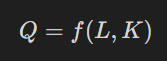
A production function shows the relationship between inputs and output:
Where:
Q = quantity of output
L = labor input
K = capital input
Short Run vs. Long Run
Short Run: At least one input (usually capital) is fixed.
Long Run: All inputs are variable.
Law of Diminishing Returns
In the short run, adding more of a variable input (like labor) to a fixed input (like capital) eventually leads to smaller increases in output.
2. Costs
Costs are the expenses incurred in the production of goods and services. Understanding cost behavior is crucial for pricing and profit decisions.
Types of Costs
Fixed Costs (FC): Do not change with output (e.g., rent, salaries).
Variable Costs (VC): Change with output (e.g., raw materials, hourly wages).
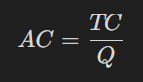
Average Cost (AC): Cost per unit of output
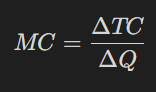
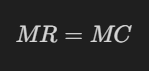
Marginal Cost (MC): Cost of producing one more unit
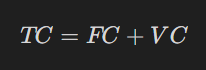
Total Cost (TC): Sum of fixed and variable costs
Cost Curves
Marginal Cost Curve: Typically U-shaped due to increasing and then decreasing returns.
Average Cost Curve: Also U-shaped, intersected by the marginal cost curve at its lowest point.
3. Economies of Scale
In the long run, firms may experience:
Economies of scale: Average costs decrease as output increases.
Diseconomies of scale: Average costs increase due to inefficiencies at large scale.
Consumer behavior is a key area of microeconomics that explores how individuals make decisions about what to buy, how much to buy, and when to buy—based on their preferences, income, and the prices of goods and services. It helps economists and businesses understand the underlying motivations and constraints that shape purchasing decisions.
Core Concepts in Consumer Behavior
1. Utility
Utility is the satisfaction or benefit a consumer derives from consuming a good or service.
Total utility refers to the overall satisfaction from all units consumed.
Marginal utility is the additional satisfaction from consuming one more unit.
Law of Diminishing Marginal Utility: As a person consumes more units of a good, the additional satisfaction from each extra unit tends to decrease.
2. Budget Constraint
Consumers have limited income, which restricts the combinations of goods and services they can afford.
The budget line represents all possible combinations of two goods a consumer can buy with a fixed income at given prices.
3. Consumer Equilibrium
A consumer reaches equilibrium when they allocate their income in a way that maximizes total utility.
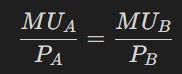
This occurs when the marginal utility per dollar spent is equal across all goods:
Where MU is marginal utility and P is price.
4. Preferences and Indifference Curves
Preferences reflect a consumer’s ranking of different bundles of goods.
Indifference curves show combinations of goods that provide the same level of satisfaction.
These curves are typically downward sloping and convex to the origin, reflecting trade-offs and diminishing marginal rates of substitution.
5. Substitution and Income Effects
When the price of a good changes:
Substitution effect: Consumers may switch to a cheaper alternative.
Income effect: A price change affects the consumer’s real purchasing power, influencing demand.
Applications of Consumer Behavior
Marketing and pricing strategies
Policy design (e.g., taxes on cigarettes or subsidies for healthy food)
Behavioral economics: Studies how psychological factors influence decisions, often challenging the assumption of purely rational behavior.
Supply and demand are foundational concepts in microeconomics that explain how prices and quantities of goods and services are determined in a market economy.
1. Demand
Demand refers to the quantity of a good or service that consumers are willing and able to purchase at various prices over a given period.
Law of Demand: As the price of a good increases, the quantity demanded generally decreases (and vice versa), assuming all other factors remain constant.
Demand Curve: Typically slopes downward from left to right, showing the inverse relationship between price and quantity demanded.
Determinants of Demand:
Price of the good
Consumer income
Prices of related goods (substitutes and complements)
Tastes and preferences
Expectations about future prices
Number of buyers
2. Supply
Supply refers to the quantity of a good or service that producers are willing and able to offer for sale at various prices over a given period.
Law of Supply: As the price of a good increases, the quantity supplied generally increases (and vice versa), assuming other factors remain constant.
Supply Curve: Typically slopes upward from left to right, showing the direct relationship between price and quantity supplied.
Determinants of Supply:
Price of the good
Costs of production (labor, materials, etc.)
Technology
Prices of related goods
Expectations about future prices
Number of sellers
3. Market Equilibrium
Equilibrium Price: The price at which quantity demanded equals quantity supplied.
Equilibrium Quantity: The amount of goods bought and sold at the equilibrium price.
If the market price is above equilibrium, a surplus occurs (excess supply).
If the market price is below equilibrium, a shortage occurs (excess demand).
4. Shifts vs. Movements
A movement along the curve is caused by a change in the price of the good.
A shift of the curve is caused by changes in other determinants (e.g., income, technology).
Economics is the study of how individuals, businesses, governments, and societies make choices about allocating scarce resources to satisfy their needs and wants. It explores the production, distribution, and consumption of goods and services, aiming to understand how economies function and how economic agents interact.
Main Areas of Economics
Economics is broadly divided into two main branches:
1. Microeconomics
Microeconomics focuses on the behavior of individual units—such as consumers, firms, and markets. It examines:
Demand and supply: How prices and quantities are determined in markets.
Consumer behavior: How individuals make decisions to maximize utility.
Production and costs: How firms decide what to produce and at what cost.
Market structures: From perfect competition to monopolies.
Labor and capital markets: How wages and returns on investment are determined.
Externalities and public goods: How market failures can occur and be addressed.