
Consumer behavior is a key area of microeconomics that explores how individuals make decisions about what to buy, how much to buy, and when to buy—based on their preferences, income, and the prices of goods and services. It helps economists and businesses understand the underlying motivations and constraints that shape purchasing decisions.
Core Concepts in Consumer Behavior
1. Utility
- Utility is the satisfaction or benefit a consumer derives from consuming a good or service.
- Total utility refers to the overall satisfaction from all units consumed.
- Marginal utility is the additional satisfaction from consuming one more unit.
- Law of Diminishing Marginal Utility: As a person consumes more units of a good, the additional satisfaction from each extra unit tends to decrease.
2. Budget Constraint
- Consumers have limited income, which restricts the combinations of goods and services they can afford.
- The budget line represents all possible combinations of two goods a consumer can buy with a fixed income at given prices.
3. Consumer Equilibrium
- A consumer reaches equilibrium when they allocate their income in a way that maximizes total utility.
- This occurs when the marginal utility per dollar spent is equal across all goods:
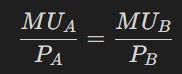
Where MU is marginal utility and P is price.
4. Preferences and Indifference Curves
- Preferences reflect a consumer’s ranking of different bundles of goods.
- Indifference curves show combinations of goods that provide the same level of satisfaction.
- These curves are typically downward sloping and convex to the origin, reflecting trade-offs and diminishing marginal rates of substitution.
5. Substitution and Income Effects
When the price of a good changes:
- Substitution effect: Consumers may switch to a cheaper alternative.
- Income effect: A price change affects the consumer’s real purchasing power, influencing demand.
Applications of Consumer Behavior
- Marketing and pricing strategies
- Policy design (e.g., taxes on cigarettes or subsidies for healthy food)
- Behavioral economics: Studies how psychological factors influence decisions, often challenging the assumption of purely rational behavior.
Leave a Reply